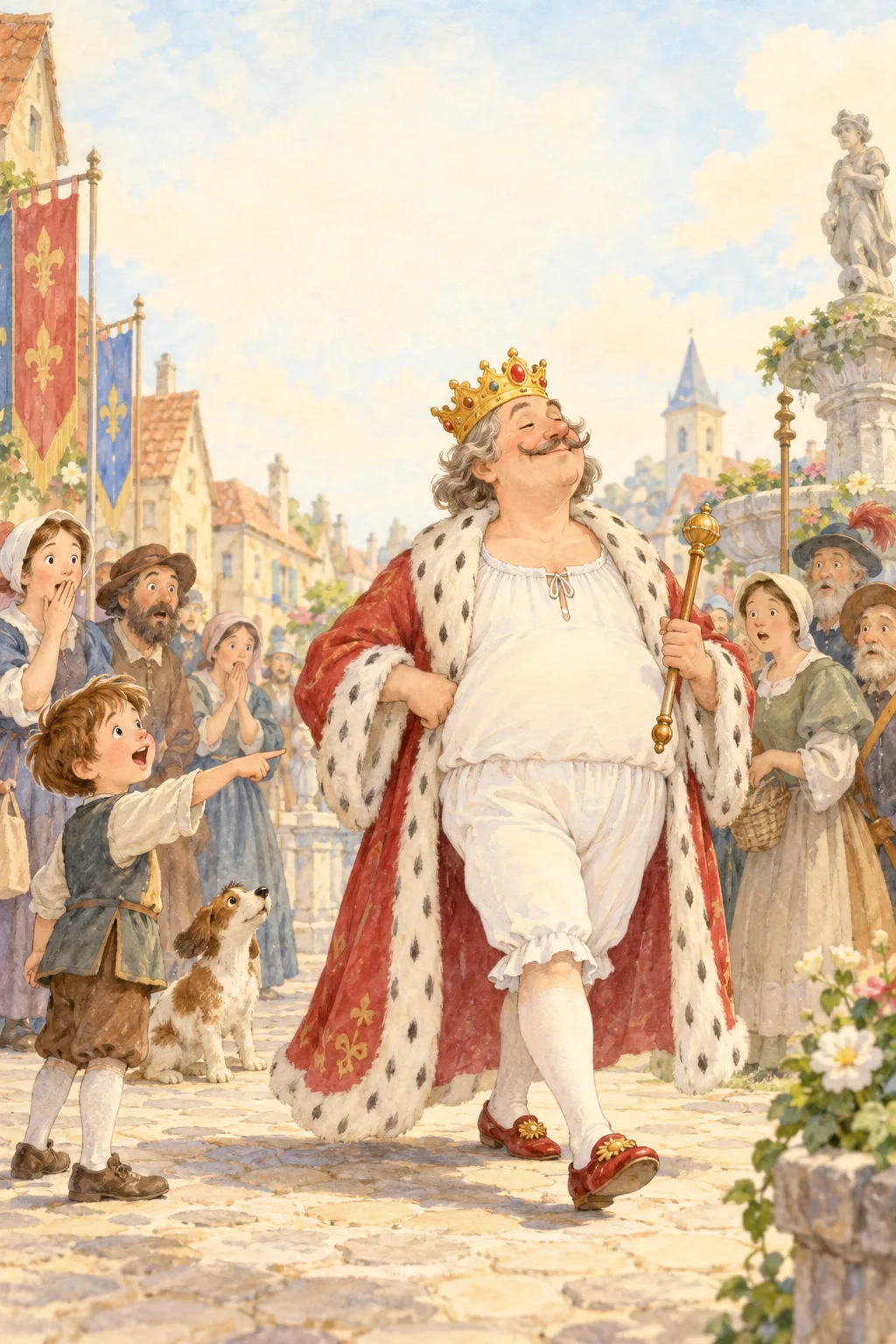
An emperor spent too much time thinking about clothes. Two tricksters promised him a special outfit that only clever people could see. They worked at empty looms and asked for silk and gold. No one wanted to admit the looms were empty. The emperor could not see anything either, but he pretended. At the parade, a child called out that the emperor wore only his ordinary underclothes. The people finally spoke honestly. The emperor returned to the palace, where he chose to listen more carefully and spend less on showy outfits.
A First Stories tale
The Emperor's New Clothes
Slide left for a simpler telling and right for more detail. Your choice carries to the next story.
Open this version in the audiobook shelfAn emperor loved fancy clothes. Two visitors said they could make a wonderful outfit, but they made nothing at all. Everyone pretended to see it. At the parade, a child said, “I only see his usual clothes!” The crowd agreed. The emperor laughed at his mistake and thanked the child for telling the truth.
An emperor spent too much time thinking about clothes. Two tricksters promised him a special outfit that only clever people could see. They worked at empty looms and asked for silk and gold. No one wanted to admit the looms were empty. The emperor could not see anything either, but he pretended. At the parade, a child called out that the emperor wore only his ordinary underclothes. The people finally spoke honestly. The emperor returned to the palace, where he chose to listen more carefully and spend less on showy outfits.
Two visitors came to an emperor who loved new clothes. They claimed they could weave cloth invisible to anyone foolish. The emperor gave them silk and gold, and they sat beside empty looms. His advisers saw nothing, but each feared being called foolish. They praised the invisible fabric. The emperor was equally puzzled and equally afraid to say so.
On parade day, the visitors pretended to dress him in the new outfit. He walked through town in his underclothes while the crowd complimented the supposed cloth. Then a child asked why the emperor had no robe. Others looked again and admitted the truth. The emperor was embarrassed, but he finished the short walk and returned to the palace. He asked his advisers why none had spoken plainly. From then on, he tried to make it easier for people to tell him when he was mistaken.
The emperor's tailors could hardly keep up with his love of fine clothes. Two strangers heard of this and offered to weave an astonishing fabric: anyone unfit for their job, they claimed, would be unable to see it. The emperor supplied expensive thread. The strangers pocketed it and worked noisily at empty looms.
When an adviser came to inspect their progress, he saw nothing. Worried that admitting this would cost him his position, he described lovely colors he could not see. Other advisers did the same. At last the emperor visited. He, too, saw empty frames, but praised the “cloth.” The deception had grown too large for anyone to question.
At the parade, the tricksters pretended to put their outfit on him. The crowd admired what it believed everyone else could see. A child, unaware of the rule that everyone must agree, said the emperor was wearing only his underclothes. The truth spread quickly. The emperor felt foolish, yet he realized that fear of looking foolish had caused the problem. Back at the palace, he told his advisers that an honest warning was more useful than an empty compliment.
The emperor liked to imagine that magnificent clothes made him magnificent. When two strangers promised fabric invisible to the incompetent, he was delighted. It sounded like a beautiful garment and a way to judge his advisers at the same time. He gave the strangers money, silk, and gold. They kept the materials and made a show of weaving at empty looms.
The emperor sent an experienced minister to inspect the work. The minister saw no cloth, but feared that saying so would expose him as unfit. He reported brilliant patterns. A second official repeated the performance. When the emperor finally stood before the looms, the same fear silenced him. Each person's praise made the next person's honesty harder.
On parade day, the strangers mimed lifting a robe over the emperor's shoulders. The people along the street admired the invisible masterpiece because they heard their neighbors doing so. Then a child asked, plainly, why the emperor had no robe. The question gave the crowd permission to say what it could see.
Embarrassed, the emperor returned to the palace. He could blame the tricksters, but he also recognized his part in the deception: he had rewarded agreement and made doubt feel dangerous. He began asking advisers for reasons, not flattery. The child's simple observation had done what elaborate reports could not.
Inspired by Andersen's Fairy Tales. This text is a new adaptation.