On a hot day, a crow looked everywhere for water. At last she found some at the bottom of a tall pitcher. She leaned in, but her beak could not reach. She tried tipping the pitcher; it was too heavy. Then she noticed pebbles on the ground. She dropped one into the pitcher and watched the water move. She dropped in more. Slowly the water rose high enough for her to drink. The crow rested in the shade, proud that she had found a new way to solve her problem.
A First Stories tale
The Crow and the Pitcher
Slide left for a simpler telling and right for more detail. Your choice carries to the next story.
Open this version in the audiobook shelfA crow was thirsty. She found a pitcher with a little water inside. Her beak could not reach it. She saw small pebbles nearby. Plop! She dropped one into the pitcher. Then another, and another. The water rose. Soon she could drink. The crow spread her wings and flew away, pleased that she had kept trying.
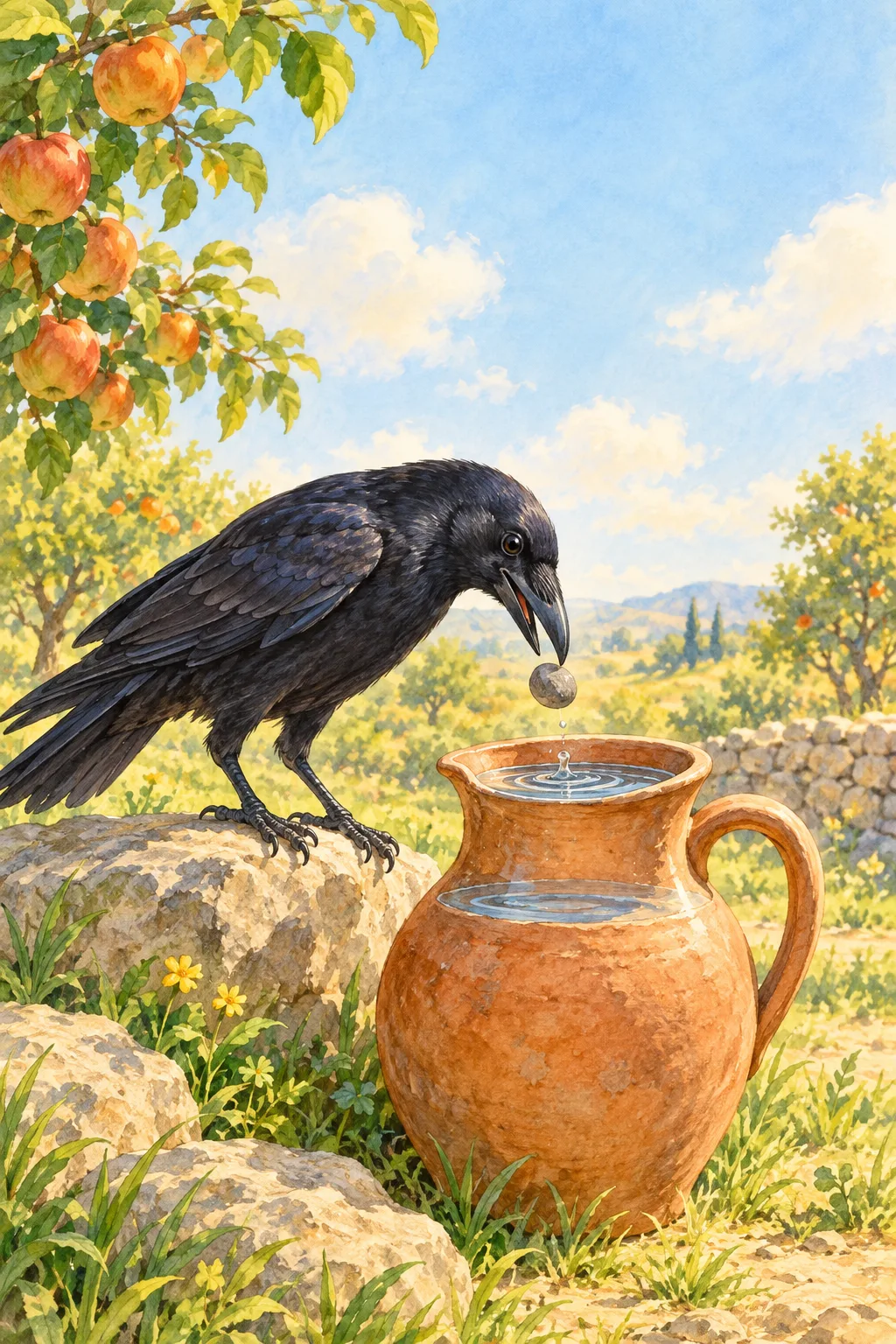
On a hot day, a crow looked everywhere for water. At last she found some at the bottom of a tall pitcher. She leaned in, but her beak could not reach. She tried tipping the pitcher; it was too heavy. Then she noticed pebbles on the ground. She dropped one into the pitcher and watched the water move. She dropped in more. Slowly the water rose high enough for her to drink. The crow rested in the shade, proud that she had found a new way to solve her problem.
The sun had warmed the fields, and a crow was very thirsty. She searched near the trees until she spotted a pitcher beside a garden wall. There was water inside, but only a little, far below its narrow rim. She stretched her beak down. It could not reach.
The crow tried to push the pitcher over, but it was too heavy. She paused and looked around instead of flying away. Small pebbles lay near the wall. She picked one up and dropped it into the pitcher. The water seemed to rise a tiny bit. She tried another, then a third.
Pebble by pebble, the water climbed. The work was slow, but the crow could see that each stone made a difference. At last she dipped her beak into the cool water and drank. She hopped into the shade to rest, then flew on, ready to notice the next useful thing on her path.
A long flight over sunlit fields left the crow thirsty. From above, she spotted a clay pitcher standing near a garden wall. It held water, but the surface lay too far down for her beak. She tried leaning farther into the narrow neck and nearly lost her balance. Pushing the pitcher did not help either; it was too heavy to tip.
The crow stepped back. She needed the water to come closer to her, since she could not get closer to it. Beside the wall lay a scattering of small stones. She lifted one in her beak and let it fall into the pitcher. The water moved. She dropped in another, then watched carefully. The surface had risen a little.
The next stones took time to carry. Some were too large for her beak, so she chose smaller ones. She continued until the water reached the neck of the pitcher. At last she could drink without stretching.
The crow had not made more water, and she had not grown a longer beak. She had changed the problem one pebble at a time. Before leaving, she settled in the shade for a moment. The garden still looked dry, but now she knew that a patient search could reveal useful things hiding in plain sight.
By midday the fields were hot and still. The crow had flown farther than she meant to, and every shallow pool she remembered had dried up. She followed a garden wall, hoping for shade, and found a clay pitcher standing beside a gate. Looking down its neck, she saw a little water glimmering at the bottom.
Her first attempts were simple. She leaned in until her feathers brushed the rim, but her beak remained too short. She pressed against the side, hoping the pitcher might tilt. Its broad base held firm. A careless push could break it or spill the little water it contained, so she stopped and considered what she could change.
Nearby lay pebbles washed smooth by an old stream. The crow carried one to the pitcher and dropped it in. The splash was small, but the water rose slightly around the stone. She tried a second. Again the level climbed. Now she understood: the pebbles took up room at the bottom, leaving the water nowhere to go but upward.
She selected stones that would fit through the neck and carried them one by one. Several times she paused in the shade to rest. It would have been easy to leave after the first few made almost no visible difference. Instead she kept looking at the rising line on the clay. Each pebble brought the water a little nearer.
At last she could reach it. She drank slowly, then perched on the wall until her strength returned. The solution had required no extraordinary power, only attention, a useful idea, and the patience to repeat it. When she flew away, the pitcher stood where she had found it, waiting to help another thirsty traveler.
Inspired by The Æsop for Children. This text is a new adaptation.