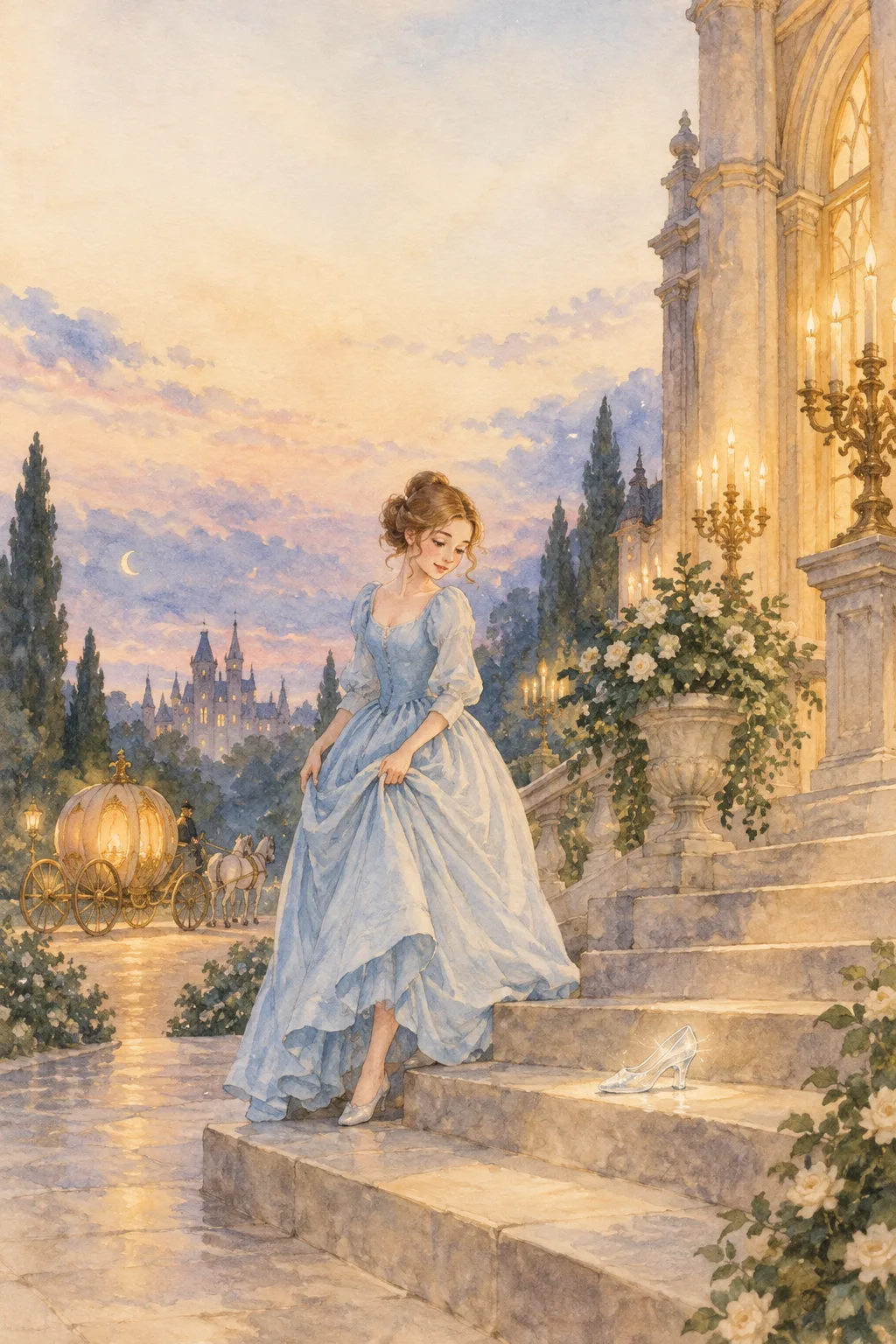
Cinderella lived with a stepmother and two stepsisters who gave her every chore. When an invitation to the royal dance arrived, they went without her. A fairy godmother appeared and turned a pumpkin into a carriage. She gave Cinderella a beautiful gown and glass slippers, but said the magic would end at midnight. Cinderella enjoyed the dance and met the prince. As the clock struck twelve, she hurried home and left a slipper behind. The prince searched until he found the person it fitted. Cinderella chose to see him again, and a new, happier chapter began.
A First Stories tale
Cinderella
Slide left for a simpler telling and right for more detail. Your choice carries to the next story.
Open this version in the audiobook shelfCinderella worked hard at home. Her sisters went to a grand dance, but she had to stay behind. A fairy helped her go too. Cinderella danced with the prince and had a lovely time. At midnight she hurried away and lost one glass slipper. The prince found her by the slipper. They were happy to meet again.
Cinderella lived with a stepmother and two stepsisters who gave her every chore. When an invitation to the royal dance arrived, they went without her. A fairy godmother appeared and turned a pumpkin into a carriage. She gave Cinderella a beautiful gown and glass slippers, but said the magic would end at midnight. Cinderella enjoyed the dance and met the prince. As the clock struck twelve, she hurried home and left a slipper behind. The prince searched until he found the person it fitted. Cinderella chose to see him again, and a new, happier chapter began.
Cinderella's stepsisters were excited about the royal ball. Cinderella helped them get ready, though her stepmother said she must remain at home to finish the chores. When the house grew quiet, a fairy godmother appeared. With a wave of her wand, she made a carriage from a pumpkin and dressed Cinderella for the ball. “Be home before midnight,” she warned, “when the magic fades.”
At the palace, Cinderella and the prince talked and danced. Neither wanted the evening to end. Then the clock began to strike. Cinderella rushed down the steps, leaving one glass slipper behind. The prince searched the kingdom for the person he had met. When the slipper fitted Cinderella, she introduced herself properly. He was delighted to find her. Cinderella decided to leave the house where she had been treated unfairly and make a life in which she could choose her own path.
Cinderella's stepmother and stepsisters expected her to cook, clean, and mend their clothes. They were pleased to receive invitations to a palace ball but would not let Cinderella join them. After they left, Cinderella sat alone beside the cold hearth. Her fairy godmother appeared and asked why she was sad. Soon a pumpkin became a carriage, mice became horses, and Cinderella wore a gown with glass slippers. The fairy warned that the spell would end at midnight.
The palace lights dazzled Cinderella, but she soon felt at ease. The prince asked her to dance, and they spoke of gardens, books, and the places they hoped to see. When the clock began to strike twelve, Cinderella ran. One slipper slipped from her foot on the stairs.
The prince kept the slipper and searched for its owner. Many people tried it, but only Cinderella could wear it comfortably. She showed him the matching slipper and explained her sudden departure. He was glad to meet her again without the disguise of magic. Cinderella accepted his invitation to return to the palace, knowing the choice was hers. Her future did not depend on a shoe; the shoe had simply helped two people find each other.
By the time the invitation to the royal ball arrived, Cinderella had spent years managing a household in which she was seldom thanked. Her stepmother claimed the chores left no time for a dance, yet Cinderella noticed how quickly everyone else found time to prepare. She helped her stepsisters with their ribbons and watched their carriage disappear. Only then did she allow herself to cry.
Her fairy godmother found her by the hearth. A pumpkin became a carriage, small creatures became its team, and Cinderella's work clothes changed into a shining gown and glass slippers. The fairy gave one condition: she must return before midnight, when every spell would fade.
At the ball, Cinderella discovered that she liked the prince's thoughtful conversation more than the glittering hall. They danced, then talked about music and the world beyond the palace. The first midnight chime startled her. She ran down the stairs, losing a slipper, and reached home just before the carriage became a pumpkin again.
The prince searched for the guest he had met, carrying the slipper as his only clue. When he reached Cinderella's home, her stepsisters protested as she tried it on. It fitted; she also produced its pair. Cinderella spoke to him as herself, not as a mysterious guest. She chose to leave the household that had diminished her and to explore a future built on kindness and mutual respect.
Inspired by The Tales of Mother Goose, by Charles Perrault. This text is a new adaptation.